






 |
 |
Any type of soil that does not have sufficient resistance to being deformed or alterations deemed unacceptable for routine use or direct the weather (rain, drought, frost) alter their behavior or structure, does not retain lasting so this condition should required an investment of this type of infrastructure.
If even under normal weather effects in the town does not stand, nor supports the routine use that is intended to track, then we say that the ground is not stable or is not stabilized properly.
Pavements Corp provides solutions that transform this inadequate ground on a stand with all the guarantees of stability and durability over time
Sometimes it is true that the natural terrain has grain size, plasticity and humidity ensure that, once compacted, present mechanical characteristics that make it usable as a road sign.
But what never happens it is that these optimum conditions of use remain over the estimated path, provoking general and punctual degradation in many cases a few months the compaction work performed life and even due to heavy rains, so almost immediately after the completion of the work.
By themselves, the land can not defend these adversities. Pavements Corp solves.
To correct this negative usual effect, we must stabilize the ground to preserve the quality of work produced by machinery and personnel and provide a good economic return on the investment. Roads that last.
Equally all sub base formed for positioning on these agglomerates or hot asphalt cold, require a permanent stabilization no problems on the surface, either by collapse, density reduction or complete destabilization of the subbase . A good road is one that keeps its stability in all its layers.
Methods of soil stabilization with lime, cement, gravel, cement, bitumen emulsions and other methods lack the sufficient stability over time and cause deformations and cracks in the surface "skin" of the firm of asphalt.
Copolymers systems to stabilize land sub-bases or rural roads and forest roads, are the densest and best performing global market these patented formulas.
We have checked with the use of different manufacturers which are best suited to a job in which consolidation is intended to achieve durability, economy and efficiency.
A real comparison over 18 months has been that has shown us what we want to apply the product to all of you. High quality, versatility and durability.
Compare the proportions of water per unit of copolymer using different brands and know which is which on the market. Do not pay to price water copolymer.
The methods used in ancient times to work with local soil in the construction of roads were empirical, and like other craft activities, were passed from generation to generation.
The information available today in this field is based primarily on science-based systematic studies corroborated by experiment, extraction of geotechnical data and good practice in the application.
However, technology is always a few steps ahead of the reality of the applications in road construction or road bases and clearly in the field of stabilization copolymers, at least in our country it brings us an advantage over 25 years of use compared to other countries with stringent quality systems like the US, where insurers and government agencies do not allow doubts regarding the quality and effectiveness of the methods or products used in building roads.
In general, all soils can be stabilized, what happens is that if the ideal stabilization is to be achieved with contributions from other soils (improved particle size) or by means of other elements (cement, lime, sodium chloride, etc. ) the cost of the improvement may be too high if the ground is correct does not meet certain conditions of internal structure.
Among the expectations to be achieved in a modified or stabilized soil they are:
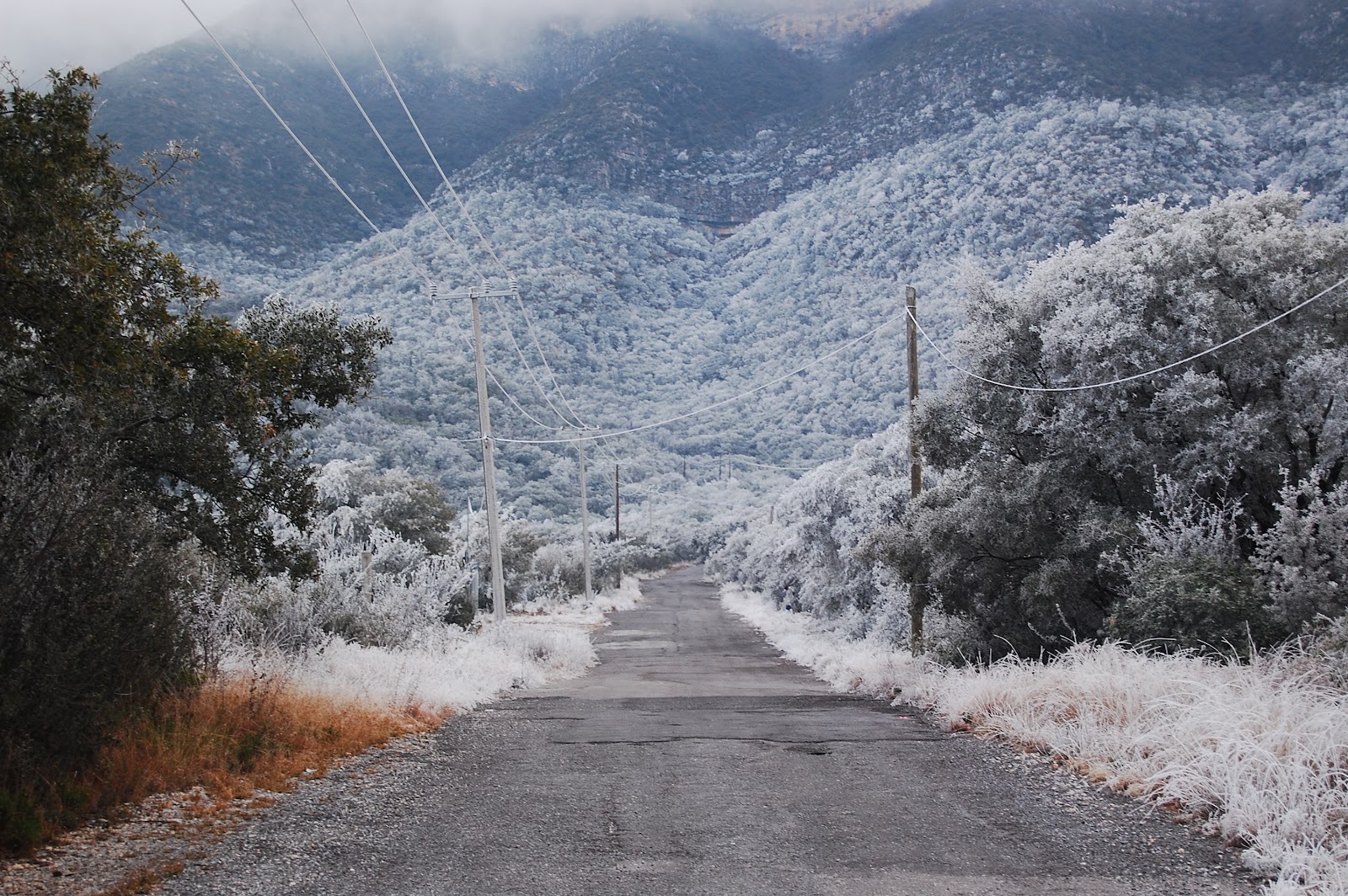
• improving the grounds of granular susceptible to frost (crioclastia)
• improved soil very little friction and cohesion for use as sub-base, arenas
• treatment of silt and / or clay soils to reduce its volume changes
• surface treatment against dust and mud and reducing erosion, both paths or slopes.
• Training films or impermeable to prevent leakage of water or subsurface gas rising layers.
A surface treatment can not be regarded as a characteristic of a soil stabilization, it must be seen more as a "skin" to defend the land itself against aggression typical of those we want to protect (erosion, permeability)
Surface treatments on the other hand are designed to provide a temporary or planned major maintenance solution if there is traffic on these, that the solutions to create a slab of a certain thickness.
Products for dust control or mud superficially, really suffer great physical wear (friction) also exist in the formulas designed with biodegradable properties that add to the quality intended to further degradation and consolidated market and road that actual duration is indicated for a few months.
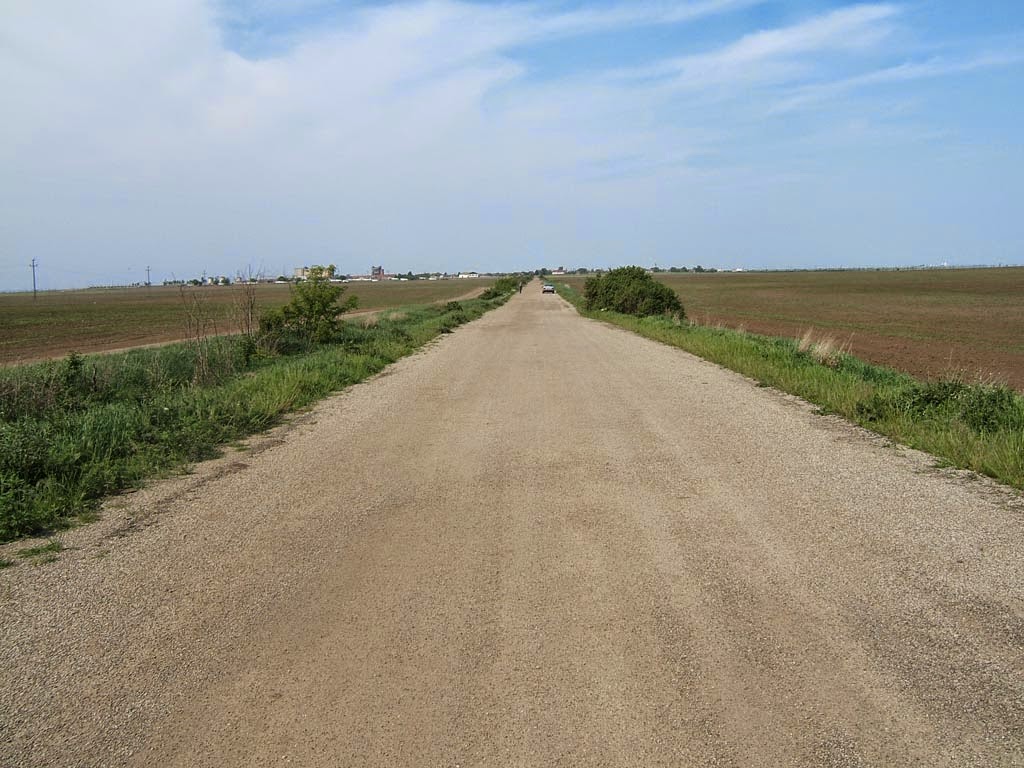
A good product to stabilize forest and rural roads or road sub-bases, is one that being environmentally friendly and respectful of the environment and people, provide a practical, useful and highly durable solution.
If a dust control for a short duration event is intended, minimum dosages can be applied and in a few months or weeks longer to effect control dust and mud.
Soil stabilization.
We refer to a stabilization of soil to the sequence of actions by which natural surfaces subjected to manipulation or treatment so that we can leverage their best mechanical properties, giving both a strong stable, able to withstand the effects of transit, the most adverse weather conditions and to stay with the offerings along the longest time possible.
It is said of a stabilization of the soil is the correction of one or more deficiencies required for use in concrete, and provides greater resistance to ground, either by reducing its plasticity, increase its carrying capacity and eliminate variability versus effects external or due to their own use.
The three ways to achieve this are:
• Stabilization by contributions of physical materials:
This system is used to improve soil physical changes occurring in the structural ratio or grain size, other elements incorporated therein. There are several methods such as:
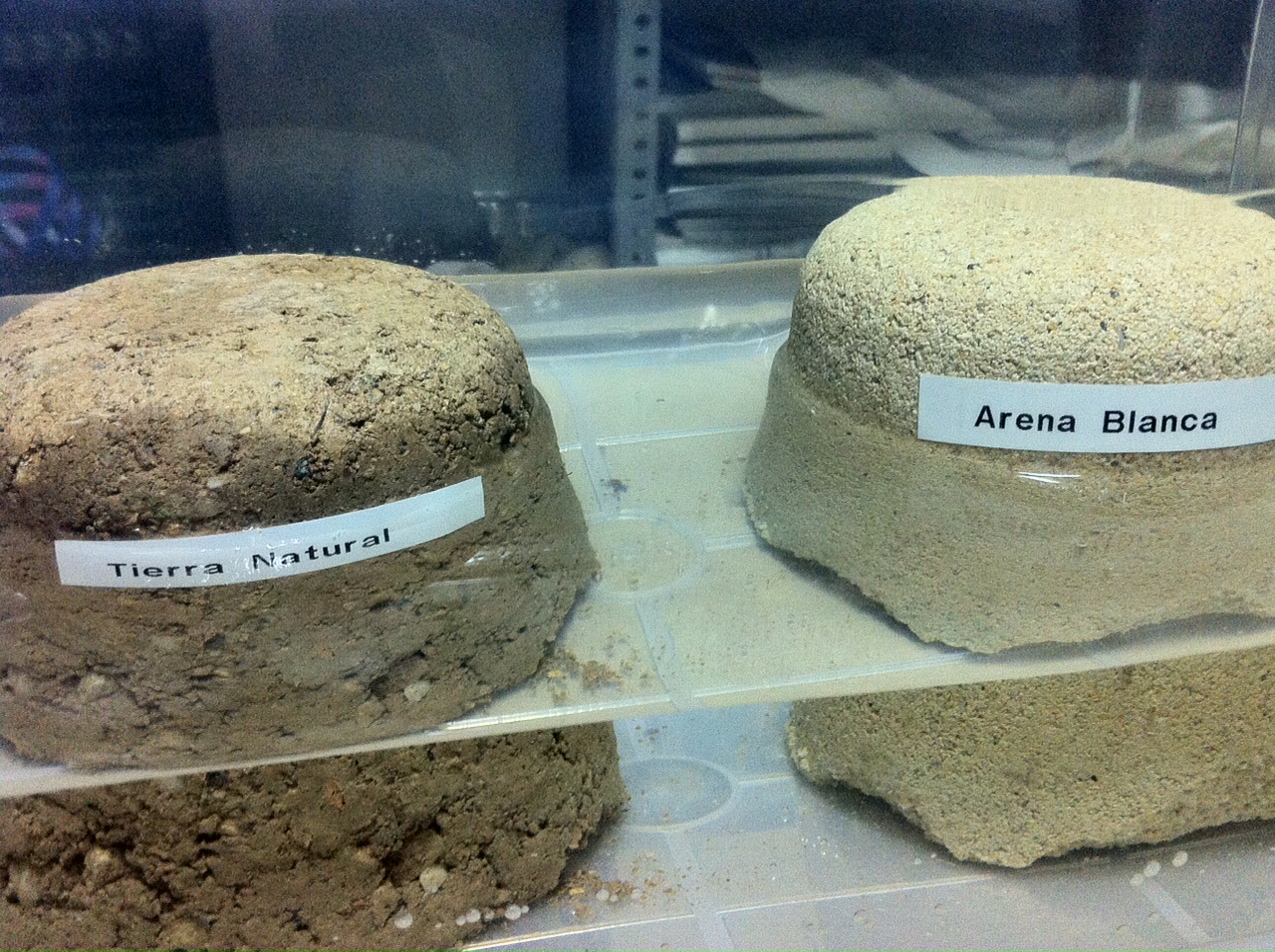
• Improvements through mixtures of different types of soils: stabilization such land is broad general use, but only with this addition does not produce the desired results with a simple mixture of different types of soils effects. It always needs at least supplement compaction. Their effects are not extended in time if it simply leads to the maximum compaction by irrigation with water. The contribution of the copolymers is crucial to its durability over time.
A clear example is fine coarse soils like gravel-sand. This land has high internal friction particle which makes great efforts to withstand compression level, but this quality does not make it stable by itself as to be the surface finish of a road and having no cohesion its particles move freely and with the passage of vehicles can be separated and even off the road.
The field with the highest proportion of clays, by contrast, have a great cohesion but very little friction which causes them to lose stability when the humidity and changes in volume.
It is evident that seeking the right mix between these two types of soil texture we have achieved that can result in a stable material that can take the big one internal friction and resistance to loads and other cohesion so that the particles stick together. But only with water and compaction it is enough? ...
The answer is no. Is not sufficient. The vinyl copolymer then fulfills its function of extending maximum durability in the stabilization obtained as encapsulated and warns against external agents and also brings a certain deformability that prevents cracks and cracks and further improved the self-supporting capacity.
Geotextiles also have solutions with products that create separating layers of drainage or containment of fine or humidity
The vibroflotation, pure soil mechanics and general form involves the insertion of vibrators at different depths in soils of sandy or granular structures.
Soil stabilization systems by additions of chemical type:
They are working system principally related to the use of certain chemicals or products, normally present under patent manufacturing or distribution, and whose use implements the substitution of metal ions generating chemical or electrical changes in the molecular constitution of soils that are intended to correct.
• Direct contribution of Cal: increases the reliability of the clay particles decreases the plasticity of clay soils and is economical, providing a chemical and mechanical grounds immediate mode and improved successive hours.
• Direct contribution Portland Cement: increases stamina, and self-supporting capacity of the soil and is mainly used for sand or fine gravel increasing their strength and correcting excessive internal friction, with the downside being too rigid.
• Introduction of Asphalt Products: bitumens or emulsions are widely used for crushing type materials without internal cohesion.
• Sodium Chloride: waterproof and decreases the fines in the soil, especially for clay and silt, partly avoiding the appearance of the powder.
• Calcium Chloride: Like the previous system of chlorides coalesce and reduce the fine on the ground, mainly clay and silt.
• ash and slag Foundry: these particles are commonly used in asphalt firm to give greater resistance, waterproof it and prolong its life, and is also a good additive for vinyl copolymers.
• Polymers: commonly used in asphalt firm to give greater resistance, waterproofing and extend the life of this type of agglomerate.
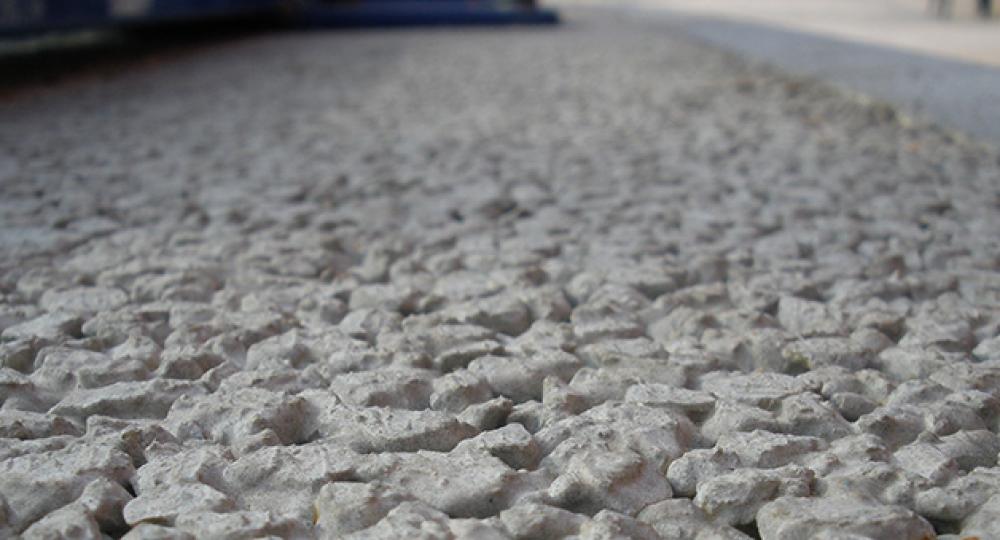
• vinyl copolymers: An improvement of polymers as it is modified to provide better performance polymer. The application technique is developed through irrigation and mixing on the local terrain itself or provided aggregates and getting prolong the life of the consolidated ground by the significant improvement of its capacity and immunity to local weather.
Soil stabilization systems by mechanical means:
Are the techniques which are drastically improve a soil or ground without significant chemical reactions occur. It is to give the degree of quality to any soil stabilization.
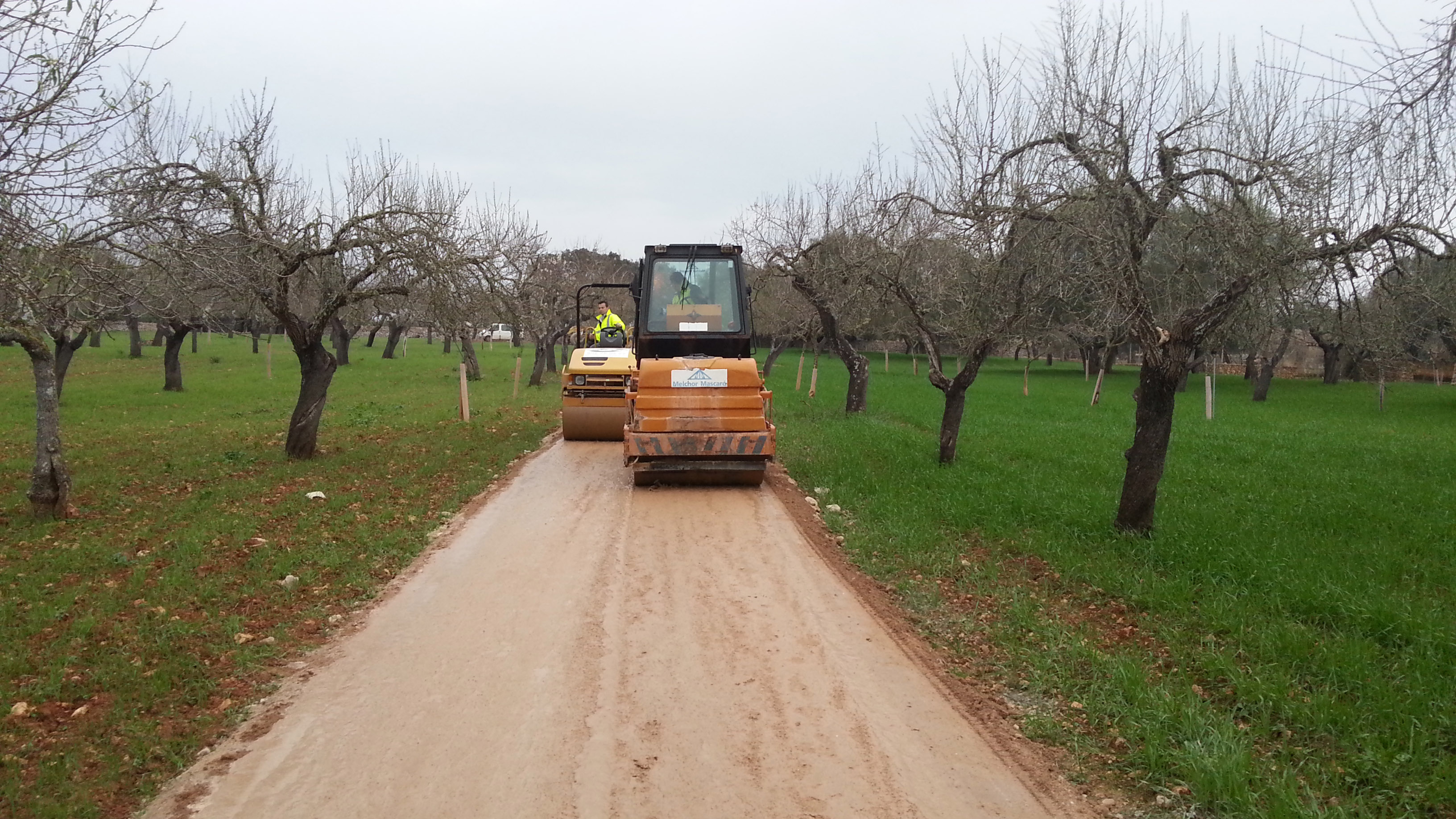
This technique improves, usually done in the sub-base, rural area or forest road and asphalt slabs: • mechanical compaction. By applying a strong mechanical energy based on weight and vibration is achieved lead to mechanical ground at full capacity and density. By itself, it is not enough to maintain the stability of the soil or land treaty, if it is not incorporated additives lengthen its initial state of maximum density. Therefore the vinyl copolymer is again indispensable for a long durability of the work.
Any process of stabilizing soil requires minimum geotechnical studies with which it is intended to get the maximum information field in which we work.
Grit to establish what kind of land it is and check your amount of fines and ranking.
Proctor modified to establish optimum moisture and maximum density, which will lead to risks of precise compaction and provide the highest quality.
CBR tests to determine their bearing capacity ...
Several trials should not be underestimated if we are to take the floor at full capacity stabilization and durability over time and to ensure that the sub-base and treated bear good and lasting road surfaces, or rural and forest roads remain in perfect condition for a long time, free of dust and mud. It is the best dust control
Pavements Corp tested various formulations to accommodate the high quality of its copolymers to real pretensions to be achieved with the stabilization of soil.
Pavements Corp adapts to the client in the same way that their products are tailored to the floor.
Do not hesitate, if you need a good solution for road, highway, rehabilitation or recycled asphalt or build good access to the farm or parking Pavements Corp will provide reliable and quality solutions.